Foil gas bearings
Compliant metal foils form an aerodynamic gas film at speed. Common questions include lift-off speed, coating wear, thermal management, and start-stop life.
Advanced bearing technologies
Fluid films, compressed air, magnetic fields, ceramic rolling elements, compliant foils, and flexures open different frontiers in speed, friction, cleanliness, stiffness, temperature, and life.
“Advanced” is not a performance grade. It is a different way of carrying load, controlling motion, surviving the environment, or managing energy.
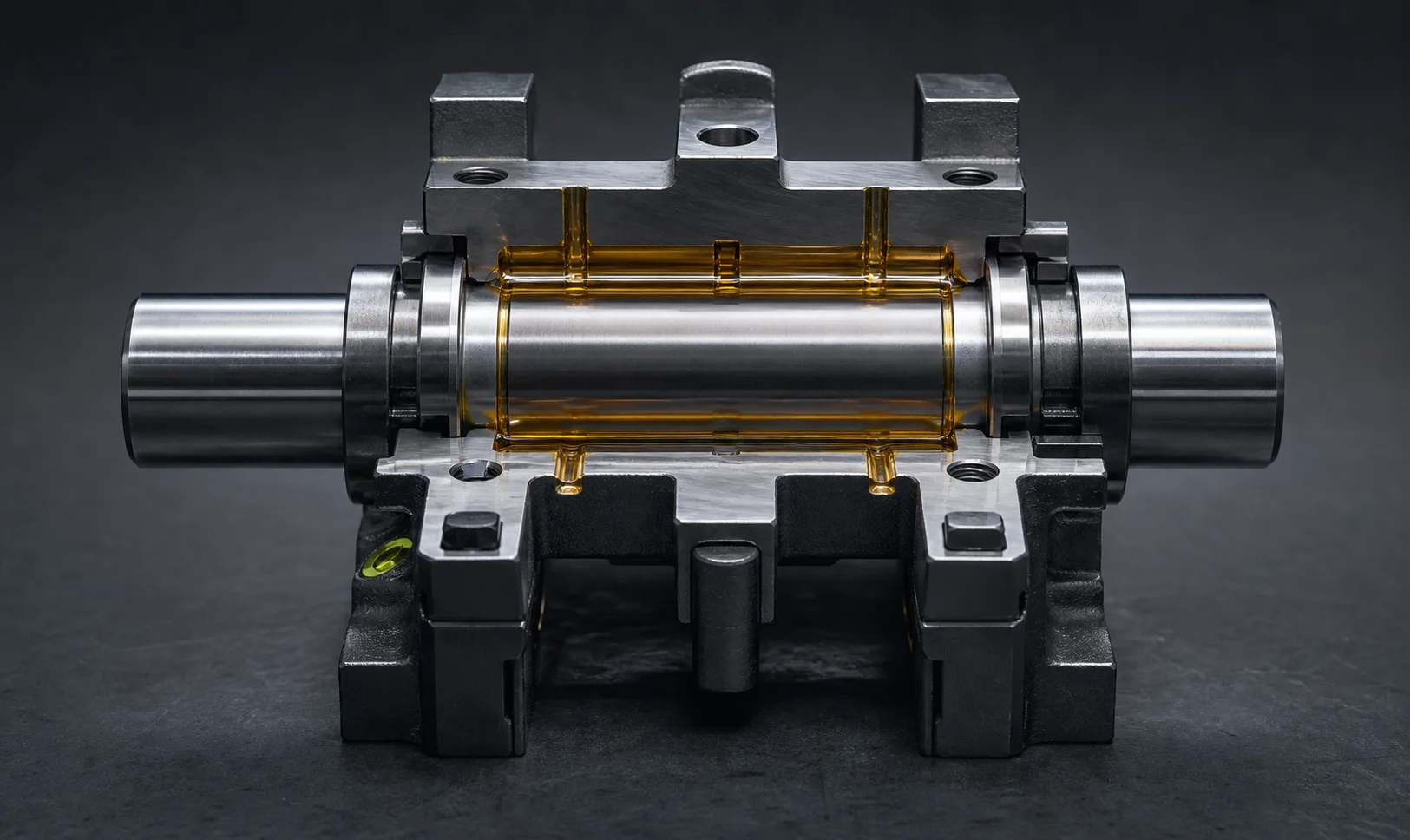
Oil, water, or process fluid separates the surfaces and carries load across a pressure field.
Explore liquid bearings →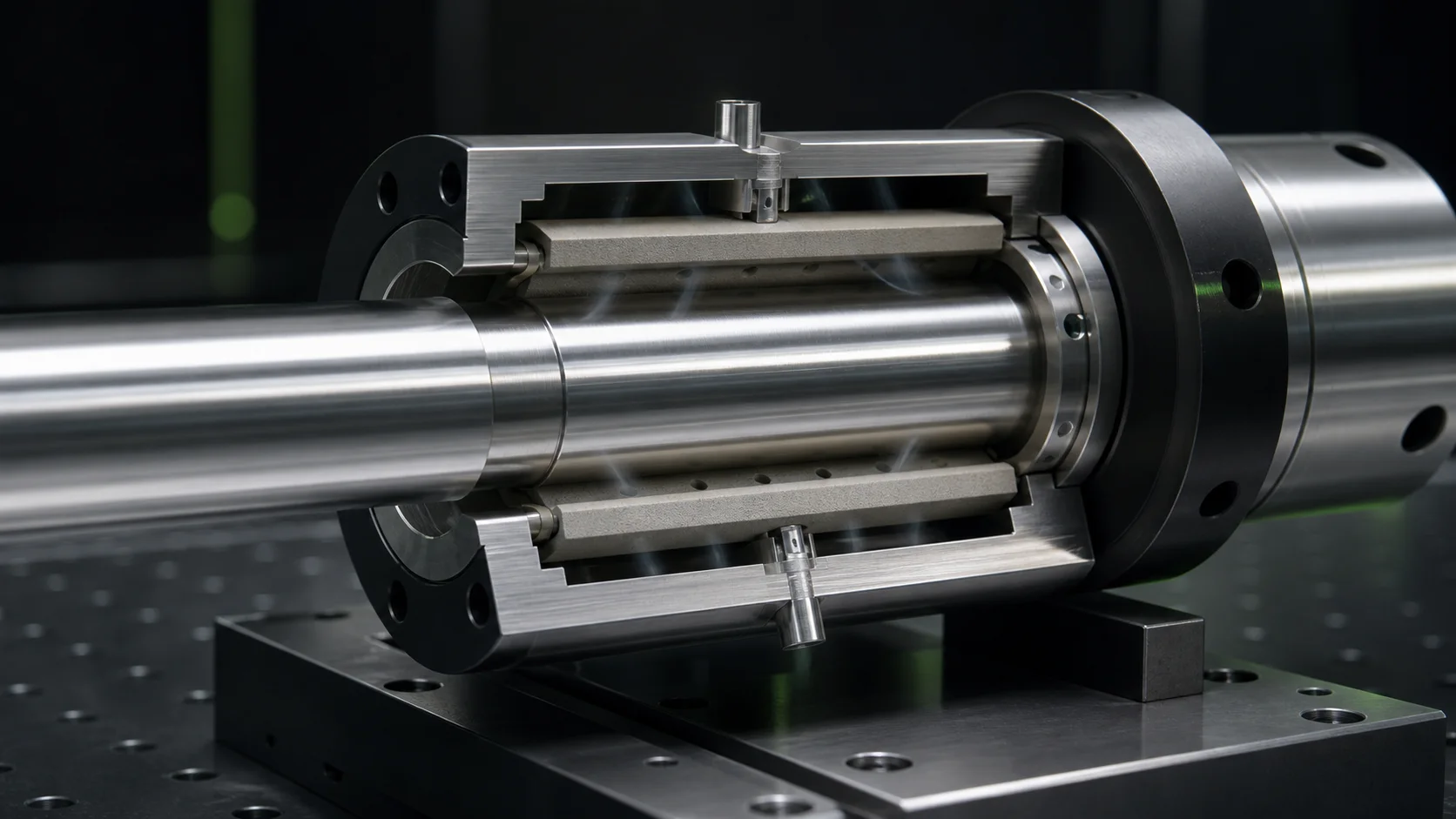
A microscopic gas film enables non-contact motion for metrology, semiconductor, optical, and ultra-precision systems.
Explore air bearings →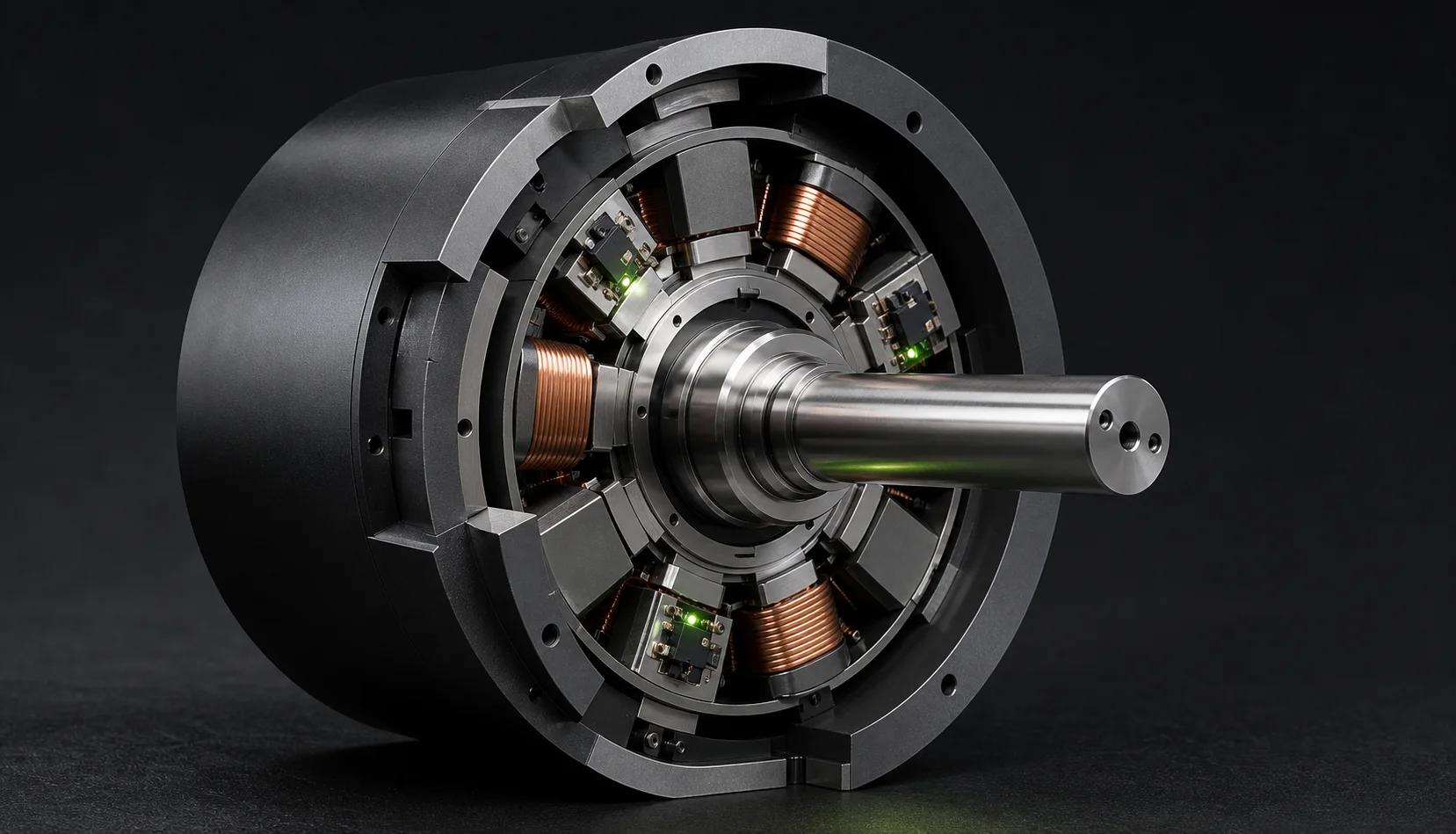
Electromagnets, position sensors, and control electronics levitate and actively stabilize a rotor.
Explore magnetic bearings →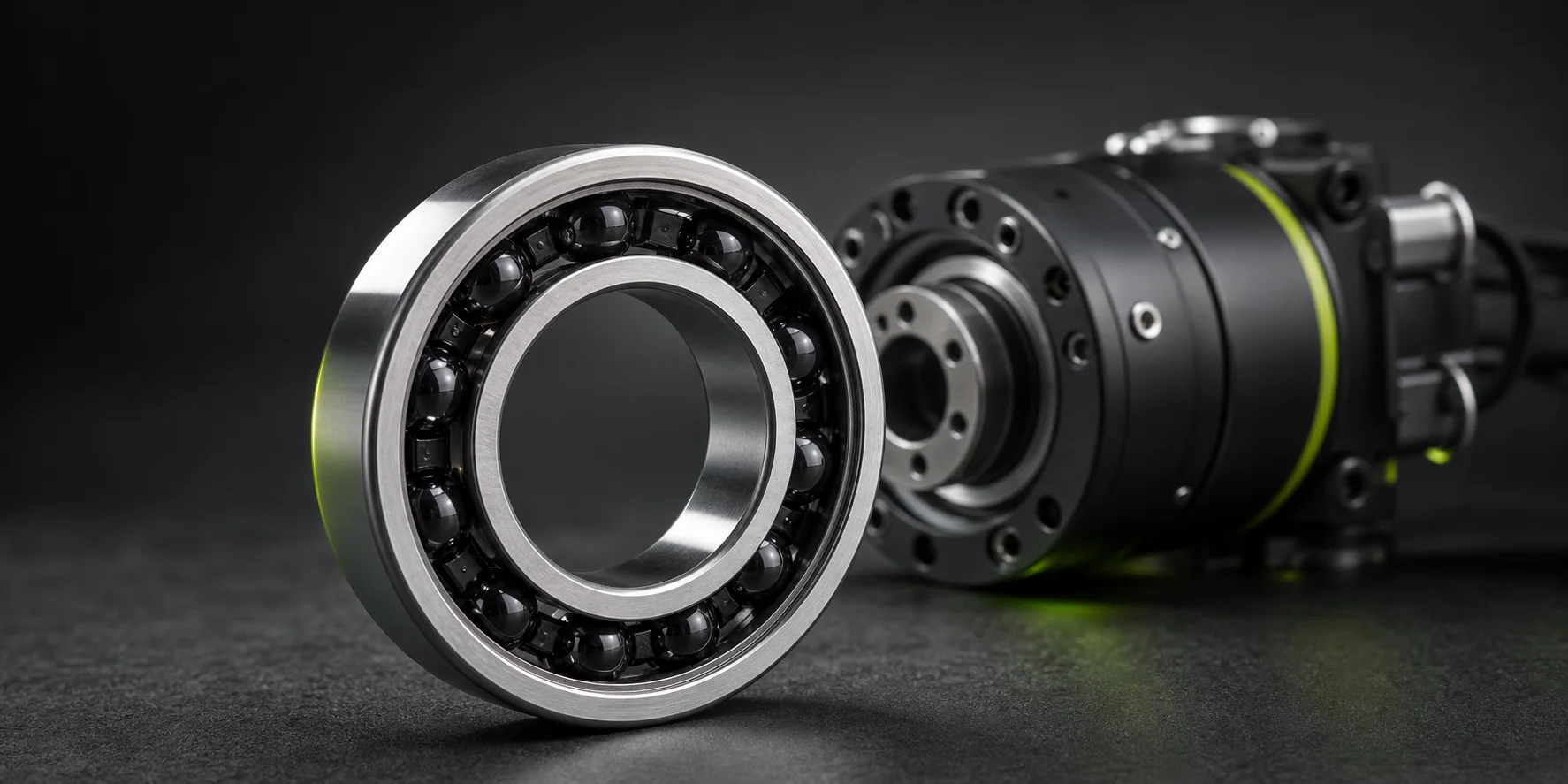
Steel races and silicon-nitride rolling elements reduce mass, electrical conduction, and centrifugal loading.
Explore ceramic bearings →| Architecture | How load is carried | What it can unlock | What it demands |
|---|---|---|---|
| Hydrodynamic liquid film | Relative motion creates a pressure wedge in lubricant. | High load, damping, long service, quiet rotation. | Minimum operating speed, thermal control, clean fluid, startup strategy. |
| Hydrostatic liquid film | An external pump pressurizes pockets before motion. | Near-zero-speed load capacity, stiffness, low friction. | Pump, restrictors, filtration, plumbing, leakage management. |
| Air bearing | Externally supplied or self-generated gas film separates surfaces. | Minimal friction, no lubricant contamination, exceptional repeatability. | Clean dry air or sufficient surface speed, tight geometry, crash protection. |
| Active magnetic | Controlled electromagnetic forces center the rotor. | Non-contact operation, high speed, active vibration control, vacuum compatibility. | Sensors, power electronics, controls, backup power, touchdown bearings. |
| Ceramic hybrid | Rolling contact through light, hard ceramic elements on steel races. | Speed, electrical isolation, lower rolling-element mass, reduced smearing risk. | Correct preload, race quality, impact assessment, careful application validation. |
Compliant metal foils form an aerodynamic gas film at speed. Common questions include lift-off speed, coating wear, thermal management, and start-stop life.
Elastic deformation creates repeatable motion without sliding or rolling contact. Travel is limited, but backlash and lubrication can disappear.
Polymers, composites, ceramics, and specialty alloys can operate with water or process fluid as the lubricant in marine, pump, and hygienic systems.
Permanent magnets, diamagnetic materials, or superconductors can create specialized support systems, usually with constraints on stability, temperature, and damping.
A non-contact bearing can still fail through contamination, pressure loss, unstable controls, rotor dynamics, thermal distortion, or a touchdown event. A ceramic hybrid can still fail from poor mounting or inadequate lubrication. The architecture has to fit the machine, not the marketing category.
It is a practical umbrella term for bearing systems using specialized materials, fluid or gas films, electromagnetic control, compliant foils, or precision structures to solve requirements beyond conventional rolling contact.
No. They can remove contact wear in normal operation, but pumps, filters, air preparation, sensors, electronics, touchdown systems, cooling, and surface condition still create maintenance needs.
Submit the full application. Depending on the technology, the sourcing scope may include the bearing element, rotor or guide surface, controller, sensors, power electronics, air preparation, pump, filtration, lubrication, and integration support.